Why Your New Spring Shoes Still Hurt (And Why Gait Analysis is the Missing Link)
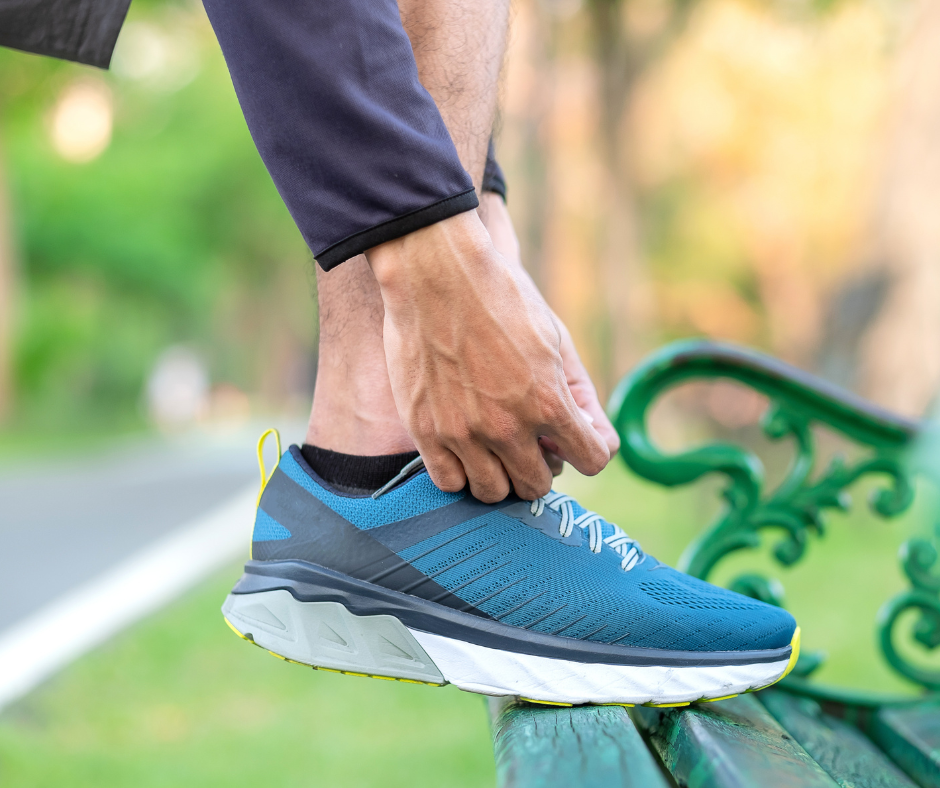
Mid-May has arrived in Maryland, and the weather is finally perfect for long walks, neighborhood runs, and weekend sports. To prepare for the season, you likely went out and bought a brand-new, expensive pair of "max-cushion" sneakers.
But a few miles into your new routine, the familiar aches return. Your heels are throbbing in the morning, your shins are burning, or your lower back aches after a simple walk.
Why do your feet still hurt when you are wearing top-of-the-line shoes?
At The Foot & Ankle Center of Maryland, we hear this frustration all the time. The problem usually isn't the shoe itself; rather, the problem is what is happening inside the shoe when you move. If you are masking structural pain with squishy foam, you are falling into the "Cushion vs. Correction" trap. This blog explains why your drugstore inserts and thick shoes are failing you, then covers why a Gait Analysis offers the best path forward.
The Illusion of "Cushion"
When your feet hurt, the natural human instinct is to seek out softness. We buy drugstore gel pads, memory foam inserts, and extra-thick running shoes.
A gel pad provides cushion. But if you have a structural flaw like flat feet (overpronation) or rigid high arches (supination), a soft pillow underneath your foot will not stop your arch from collapsing.
In fact, a highly unstable, squishy surface can force your foot muscles to work harder to find balance, leading to rapid fatigue.
To stop the pain, you need correction. You need a structural scaffold that holds your bones in their optimal alignment.
The Diagnostic Key: Gait Analysis
You cannot fix a mechanical problem if you only look at the foot while it is standing still. Your foot behaves completely differently when it bears weight and moves.
This is where Gait Analysis comes in.
Instead of just guessing your arch type, Dr. Cohen utilizes state-of-the-art technology to analyze exactly how you walk. We observe your stride to identify "energy leaks" and mechanical failures that occur in real time:
- Do your ankles roll inward the moment your heel strikes the ground?
- Do you push off too heavily on your second toe because of a hidden bunion?
- Does one leg bear more shock than the other?
By mapping your walking pattern, we pinpoint the exact structural failure causing your pain.
The Kinetic Chain: It’s Not Just About Your Feet
Gait analysis doesn't just solve foot pain; it solves body pain.
· Your body is a connected mechanical system known as the Kinetic Chain.
· If your foot rolls inward (overpronates) when you walk or run, it forces your shin bone to twist inward.
· That twist pulls on your knee joint (causing "Runner's Knee"), which tilts your pelvis forward, creating deep strain in your lower back.
We often see patients who have spent months doing physical therapy for a bad knee, only to discover through gait analysis that their knee pain was entirely caused by a collapsing arch!
Custom Orthotics: The Ultimate "Spring Training" Gear
Once your gait analysis reveals the specific flaw in your stride, we build the solution.
· Custom Orthotics are prescription medical devices fabricated from a precise 3D mold of your foot.
· They are engineered to physically block the abnormal movements we identified during your gait analysis.
· They don't just sit in your shoes; they actively realign your Kinetic Chain, preventing the micro-tears that cause Plantar Fasciitis and shin splints.
Stop Guessing with Your Stride
Don't let foot pain ruin the best weather of the year. If your new shoes aren't doing the trick, it is time to check your mechanics.
Questions? Concerns? Contact the office of Dr. Ross Cohen of The Foot & Ankle Center of Maryland in Glen Burnie, MD, at (410) 761-3501 to schedule your initial diagnostic appointment.
We look forward to meeting you!